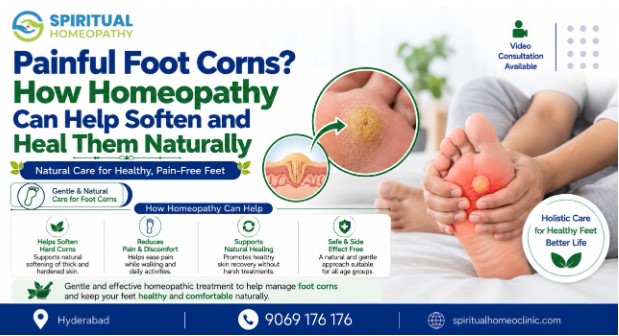
Experiencing sharp, localized pain with every step can make walking, exercising, or standing for long periods feel exhausting. Seeking Corn Treatment with Homeopathy offers individuals a natural, constitutional approach aimed at supporting healthy skin metabolism, easing localized discomfort, and softening thickened skin tissue alongside proper footwear adjustments. Understanding how complementary care fits into a comprehensive foot care plan helps patients address foot corns safely, comfortably, and effectively.
At Spiritual Homeopathy, a recognized healthcare center in Hyderabad, our compassionate doctors focus on providing individualized, patient-centered care for both acute and chronic conditions. Operating as a non-profit organization dedicated to accessible healthcare, Spiritual Homeopathy provides tailored clinical evaluations for women’s health, skin and hair concerns, hormonal imbalances, digestive disorders, child healthcare, and other chronic health issues. Our experienced homeopaths strongly believe in treating every ailment from its root, working in harmony with patients to support overall skin vitality and long-term wellness.
What Are Foot Corns and Why Do They Develop?
Foot corns are localized, hyperkeratotic lesions that form on the skin as a protective reaction to chronic mechanical stress.
Understanding Corns as Thickened Areas of Skin
When a specific spot on the foot experiences continuous friction or pressure, the body responds by accelerating keratin production. This causes the outer layer of skin (stratum corneum) to thicken into a hard, compact mass.
How Repeated Pressure and Friction Cause Corns
According to dermatological guidelines published by the American Academy of Dermatology (AAD), corns develop when skin is squeezed between a prominent underlying bone and a rigid external surface, such as tight shoe leather or an adjacent toe.
Common Areas Where Foot Corns Develop
Corns frequently form on pressure-bearing regions of the feet, including the tops and sides of smaller toes, the weight-bearing ball of the foot, and the interdigital web spaces between toes.
Why Corns Can Become Painful During Walking
Unlike broad calluses, a corn features a hard, inverted conical core that points inward toward deeper skin layers. When walking, body weight presses this hard central core into underlying nerves, triggering sharp, localized pain.
What Are the Common Signs and Symptoms of Foot Corns?
Identifying the characteristic signs of a foot corn helps distinguish it from other dermatological skin lesions.
Small, Thickened Areas of Hard Skin
A distinct, raised bump of yellowish or translucent thickened skin that feels firm or rubbery to the touch.
Tenderness or Pain When Pressure Is Applied
Sharp, pinpoint pain when pressing directly on the lesion or while walking in fitted footwear.
A Hard Centre Surrounded by Thickened Skin
A visible, dense central focal point (core) surrounded by an outer ring of inflamed or thickened skin tissue.
Discomfort While Wearing Shoes or Standing for Long Periods
Persistent aching or burning sensation triggered by footwear contact or prolonged standing during daily activities.
What Causes Corns on the Feet?
Corns develop as an adaptive physiological defense mechanism against repeated mechanical trauma and shear forces.
Wearing Tight or Poorly Fitting Shoes
Footwear that is too narrow squeezes the toes together, causing continuous friction between skin surfaces and rigid shoe material.
High Heels and Shoes That Put Pressure on the Toes
High-heeled shoes shift body weight forward onto the delicate metatarsal heads and toes, dramatically increasing pressure on the forefoot.
Toe Deformities and Abnormal Foot Mechanics
Structural foot variations—such as hammertoes, claw toes, bunions, or high foot arches—create prominent bony points that rub constantly against shoes.
Repeated Pressure From Walking or Standing
Jobs or activities that require standing, walking, or running on hard surfaces for extended hours increase repetitive foot impact.
Why Certain Activities Can Increase Friction
Participating in sports without protective socks or walking barefoot inside rigid footwear accelerates skin friction and corn formation.
What Is the Difference Between a Corn, a Callus, and a Plantar Wart?
Distinguishing between common foot skin conditions ensures that appropriate, safe care measures are chosen.
| Feature | Foot Corn | Callus | Plantar Wart (Verruca) |
| Primary Cause | Pinpoint pressure over bony prominences. | Broad friction across wide skin areas. | Viral infection (Human Papillomavirus / HPV). |
| Central Core | Inverted, hard conical core pointing inward. | Flat, broad area without a central core. | Pinpoint black dots (clotted capillaries). |
| Common Location | Tops of toes, sides of feet, between toes. | Heels, soles, and weight-bearing ball of foot. | Soles of feet, heel, or non-pressure areas. |
| Pain Pattern | Painful when pressed directly inward. | Mild, dull ache under heavy friction. | Painful when squeezed side-to-side. |
How Corns Differ From Calluses
Corns are smaller, deeper, and feature a painful central core, whereas calluses are flat, broad areas of thickened skin that rarely cause sharp, localized pain.
How Plantar Warts Can Resemble Corns
Plantar warts are viral lesions that disrupt natural skin lines and contain tiny black pinpoint dots, distinguishing them from mechanical corns.
Why Correct Identification Matters Before Treatment
Treating a viral wart with friction cushions or using harsh corn plasters on thin viral tissue can trigger skin irritation or secondary infection.
When to Seek a Professional Foot Examination
If a skin growth bleeds, spreads, or causes severe pain, consulting a healthcare professional ensures an accurate clinical diagnosis.
What Are the Different Types of Foot Corns?
Foot corns are categorized based on their texture, moisture level, and anatomical location on the foot.
Hard Corns on the Toes and Other Pressure Points
Hard corns (heloma durum) are dense, compact lesions with a hard central core, commonly located on the tops of smaller toes or the outer edge of the foot.
Soft Corns Between the Toes
Soft corns (heloma molle) are whitish, rubbery, moist lesions found in the sweaty web spaces between toes, where skin friction is compounded by moisture.
Seed Corns and Small Areas of Thickened Skin
Seed corns (heloma milliare) are tiny, non-painful or mildly tender plugs of hard skin that form on the non-weight-bearing arch or heel surfaces.
How the Type and Location of a Corn Affect Management
Soft corns require moisture control and interdigital padding, while hard corns require pressure-relieving footwear and protective cushioning.
Why Do Foot Corns Sometimes Become More Painful?
Ignoring ongoing foot friction allows skin lesions to thicken further, worsening localized pressure and discomfort.
Continued Pressure From Shoes and Walking
Persisting with tight footwear pushes the hard central core deeper into sensitive dermal tissues, aggravating nerve endings.
Thickened Skin Building Up Around the Corn
As hyperkeratosis accumulates, the lesion grows larger, creating a vicious cycle of increased pressure and accelerated skin hardening.
Irritation, Cracking, or Skin Damage
Unmanaged dry corns can crack (fissure), opening the skin barrier to inflammation, redness, and severe local burning.
Signs That May Indicate Infection or Another Foot Problem
Redness spreading around the corn, localized warmth, throbbing pain, oozing fluid, or pus indicates a secondary bacterial infection that requires prompt medical attention.
How Are Foot Corns Diagnosed?
Evaluating a foot corn involves inspecting the skin lesion, assessing foot structure, and reviewing daily footwear choices.
Examining the Appearance and Location of the Corn
Healthcare providers evaluate the visual characteristics, core structure, and specific anatomical location of the lesion under proper lighting.
Reviewing Footwear and Pressure-Related Habits
Clinicians inspect daily footwear, checking toe box width, heel height, sole cushioning, and wear patterns on outer shoe soles.
Identifying Possible Underlying Foot Deformities
Physical checks assess for hammertoes, bunions, flat feet, or rigid arches that alter weight distribution during walking.
Why Some Foot Lesions Need Further Assessment
Lesions with atypical bleeding, loss of sensation, or uncertain borders warrant expert evaluation by a dermatologist or podiatrist to rule out ulceration or viral growths.
What Are the Evidence-Based Treatment Options for Foot Corns?
Effective management focuses on eliminating mechanical pressure, softening thickened skin, and protecting underlying tissues.
Reducing Pressure and Friction on the Affected Area
Relieving pressure is the most important step in corn care; without eliminating friction, skin thickening will persist.
Choosing Properly Fitting Shoes With Adequate Toe Room
Selecting footwear with a wide, deep toe box prevents toes from crowding together or rubbing against upper shoe linings.
Using Protective Padding or Insoles When Appropriate
Applying non-medicated silicone toe sleeves, felt donut-shaped pads, or custom orthotic insoles redistributes weight away from painful pressure points.
Professional Removal of Thickened Skin When Needed
A qualified podiatrist or healthcare professional can safely pare down (debride) thickened keratin layers using sterile clinical instruments.
When a Podiatrist or Other Qualified Healthcare Professional Should Help
Patients with severe pain, recurrent corns, or underlying health conditions should seek professional clinical care rather than attempting self-treatment.
Can Corn Treatment with Homeopathy Really Help?
Exploring constitutional care offers individuals a supportive option focused on skin health, general comfort, and natural recovery processes.
Understanding What Homeopathy Claims to Offer
When exploring Corn Treatment with Homeopathy, doctors conduct a comprehensive consultation to evaluate individual skin tendencies, thermal responses, and constitutional factors.
What Scientific Research Says About Homeopathy for Corns
Global health guidelines highlight that while individuals explore complementary options, evidence-based management of corns relies fundamentally on reducing mechanical friction and protecting skin integrity.
Why Homeopathy Is Not an Established Method for Removing Corns
Homeopathy does not act as a mechanical tool or surgical razor for physically cutting away hyperkeratotic tissue. It serves as a supportive constitutional option alongside essential foot hygiene.
Why Reducing Pressure Is Essential for Managing Corns
Regardless of the wellness approach chosen, corns cannot heal if tight shoes continue to exert mechanical pressure on the skin.
Questions to Ask Before Choosing a Treatment Approach
- What is causing the mechanical pressure on my foot skin?
- Are my shoes providing adequate width and cushioning for my toes?
- How can I safely soften thickened skin without injuring healthy tissue?
What Should You Know About corn homeopathy?
Understanding how complementary options integrate with daily foot care ensures safe, realistic expectations.
Common Beliefs About Homeopathy and Skin Conditions
Proponents of corn homeopathy suggest that addressing constitutional health and skin vitality supports the body’s natural healing response.
The Difference Between Personal Experiences and Scientific Evidence
While individuals may share positive personal anecdotes regarding skin comfort, clinical evidence emphasizes the necessity of relieving mechanical friction.
Why Testimonials Do Not Establish Treatment Effectiveness
Personal reviews often reflect concurrent changes in footwear, resting habits, or natural symptom variations rather than verified therapeutic efficacy.
Understanding the Limitations of Homeopathy for Corn Removal
Complementary options should not be expected to dissolve dense, hard hyperkeratotic cores instantly without proper pressure relief and daily foot hygiene.
Is homeopathic treatment for corn a Substitute for Foot Care?
Maintaining clear boundaries between supportive approaches and essential foot hygiene protects skin health and prevents complications.
Why Identifying the Cause of the Corn Matters
Determining whether a corn stems from narrow shoes, high heels, or a structural hammertoe ensures that the root cause of friction is addressed directly.
How Footwear Changes Can Help Reduce Repeated Pressure
Switching to cushioned, wide-fitting footwear allows compressed skin to recover and prevents new hyperkeratosis from forming.
Why Persistent or Painful Corns May Need Professional Treatment
When a corn causes severe pain or fails to improve with padded footwear, evaluation by a healthcare professional is recommended.
How to Discuss Complementary Approaches With a Healthcare Professional
Inform your treating doctor about any supportive routines you follow to maintain a coordinated, safe foot care plan. Exploring homeopathic treatment for corn works best alongside practical foot care.
What Should You Know About foot corn homeopathy?
Evaluating the specific location and depth of a corn guides appropriate protective measures and supportive care choices.
Why Corn Location and Foot Structure Matter
Soft corns between toes require moisture-wicking interdigital pads, whereas hard corns on toe joints need cushioned toe caps.
The Importance of Protecting the Surrounding Skin
Any supportive care routine must protect nearby healthy skin from irritation, maceration, or accidental breakdown.
Why Corns May Return if the Underlying Pressure Continues
If narrow footwear or uncorrected foot friction persists, thickened skin will re-accumulate over time, regardless of prior care.
Setting Realistic Expectations About Treatment Outcomes
Softening hard skin and recovering from foot discomfort requires consistent pressure relief, proper footwear, and patient-centered care. Exploring foot corn homeopathy offers constitutional support throughout this process.
How Should You Approach hard corn homeopathy Claims?
Hard corns on prominent toe joints require realistic, evidence-aware care strategies focused on long-term pressure relief.
Why Hard Corns Often Develop Over Repeated Pressure Points
Dense, compact hard corns accumulate specifically where skin is repeatedly pinched between rigid shoe leather and underlying bone.
The Importance of Appropriate Footwear and Pressure Relief
Wearing shoes with flexible, soft upper materials and roomy toe boxes provides the physical space needed to relieve hard corn pressure.
Why Unproven Treatments May Delay Effective Care
Relying solely on unproven remedies while continuing to wear restrictive shoes allows the hard core to press deeper, worsening pain.
When a Persistent Hard Corn Needs Professional Assessment
If a hard corn impairs normal walking or shows signs of cracking, consulting a qualified healthcare professional is essential. Exploring hard corn homeopathy should be integrated with pressure-relieving footwear.
Can homeopathy for corns Help Prevent Recurrence?
Preventing recurrent foot corns requires an ongoing commitment to eliminating mechanical friction and protecting skin resilience.
Understanding Why Corns Can Return
Corns return whenever the original friction source—such as narrow shoes or unpadded insoles—is re-introduced to the feet.
Reducing Friction Through Better Footwear Choices
Invest in shoes that match the natural shape of your feet, leaving a half-inch space between your longest toe and the shoe end.
Using Protective Padding and Insoles When Recommended
Incorporate non-medicated protective silicone sleeves, gel pads, or custom orthotics to cushion vulnerable foot areas.
Monitoring Pressure Points and Changes in the Skin
Inspect your feet regularly during daily bathing, noting early areas of redness or skin thickening before hard corns develop. Exploring homeopathy for corns provides supportive care alongside these daily habits.
Why Preventing Pressure Is More Important Than Relying on Unproven Remedies
Eliminating mechanical pressure is the single most effective, proven strategy to prevent hyperkeratosis from recurring.
What Home Care Measures May Help Relieve Corn Discomfort?
Gentle, safe home practices help soothe physical discomfort and support skin hydration without injuring delicate tissue.
Soaking the Feet in Warm Water When Appropriate
Soak feet in warm water for 10 to 15 minutes to hydrate and soften thickened keratin layers before gently applying moisturizer.
Gently Caring for Thickened Skin Without Cutting It
After soaking, use a soft washcloth or gentle pumice stone in light circular motions to smooth surface skin. Never rub aggressively.
Avoiding Tight Shoes and Repeated Pressure
Rotate footwear daily, opting for shoes made of breathable, soft materials that do not compress the toes.
Why Corn Plasters and Acid-Based Products Require Caution
Over-the-counter medicated corn plasters containing strong salicylic acid can burn surrounding healthy skin, causing painful chemical burns or ulcers.
Why People With Diabetes or Poor Circulation Need Professional Advice Before Treating Corns at Home
Individuals with diabetes, peripheral neuropathy, or poor circulation must never treat corns at home. Reduced sensation and slow healing create a high risk of undetected skin breakdown and dangerous foot ulcers.
When Should You Seek Professional Help for a Foot Corn?
Certain clinical warning signs require prompt evaluation by a podiatrist, dermatologist, or medical specialist to safeguard foot health.
Key Warning Signs Requiring Professional Evaluation
- Persistent Pain That Affects Walking: Severe pain that alters your normal gait or restricts daily mobility.
- Redness, Swelling, Discharge, or Other Signs of Infection: Throbbing pain, surrounding skin redness, warmth, or pus oozing from the corn.
- Bleeding, Open Skin, or Rapid Changes in Appearance: Cracks, open sores, or spontaneous bleeding around the hyperkeratotic lesion.
- Corns in People With Diabetes, Nerve Damage, or Poor Circulation: Any foot corn occurring in a patient with diabetes or circulatory impairment requires immediate medical attention.
- Why Self-Cutting or Aggressive Removal Can Cause Injury: Never use razor blades, scissors, or sharp tools to cut a corn at home. Unsterile cutting carries a severe risk of deep tissue injury, uncontrolled bleeding, and serious infection.
Finding Appropriate Foot Care in Hyderabad
Accessing qualified healthcare professionals in Hyderabad ensures that persistent or painful foot corns are evaluated thoroughly and safely.
What to Look for When Choosing a Healthcare Provider
Select registered medical centers, qualified dermatologists, or experienced homeopaths who prioritize complete health evaluations, hygiene standards, and patient safety.
Questions to Ask About Corn Removal and Prevention
- What specific footwear changes or cushioning options will best protect my feet?
- How can I safely manage thickened skin without irritating surrounding tissue?
- Are there structural foot mechanics that require custom insoles or orthotics?
When to Consult a Dermatologist, Podiatrist, or Other Qualified Professional
Schedule an evaluation with a specialist if you have recurrent corns, severe pain, underlying structural foot deformities, or health conditions like diabetes.
Why Treatment Should Address the Underlying Cause of the Corn
Matching care directly to the root cause of friction—whether correcting narrow footwear or cushioning bony joints—ensures long-term comfort and healthy feet.
Frequently Asked Questions About Foot Corns and Homeopathy
Can homeopathy remove foot corns permanently?
Homeopathy offers supportive constitutional care for overall skin health. Permanent removal requires eliminating the mechanical pressure and friction that caused the corn to develop.
Is there scientific evidence that homeopathy softens corns?
Scientific foot care guidelines emphasize that skin softening and relief result from hydration, pressure elimination, and gentle foot hygiene. Homeopathy serves as an optional constitutional support.
What is the difference between a corn and a plantar wart?
A corn is a non-contagious hyperkeratotic plug caused by friction, whereas a plantar wart is a viral infection (HPV) containing tiny black dots that hurts when squeezed side-to-side.
Can tight shoes cause painful foot corns?
Yes. Tight, narrow, or high-heeled shoes squeeze the toes and exert continuous pressure on bony joints, making them the leading cause of foot corns.
How can I reduce pressure on a foot corn?
Switch to shoes with a wide toe box, use non-medicated silicone toe pads or donut-shaped felt cushions, and avoid high heels.
Is it safe to cut a corn off at home?
No. Never use razor blades, clippers, or sharp instruments to cut a corn at home. Self-cutting creates a severe risk of deep cuts, severe bleeding, and dangerous infections.
Can people with diabetes use corn removal products?
No. People with diabetes should never use over-the-counter medicated corn plasters or self-treatment products due to the high risk of chemical burns, skin ulcers, and infection.
When should I consult a healthcare professional about a painful corn?
Consult a healthcare professional if the corn causes severe pain, shows signs of infection (redness, pus), bleeds, or if you have diabetes or poor circulation.
Conclusion: Making Informed Decisions About Foot Corn Treatment
Understanding Pressure and Friction in Corn Formation
Foot corns are a natural protective response to repeated mechanical pressure and friction. Successfully managing them requires identifying and removing the external forces squeezing the skin.
Prioritizing Proper Footwear and Pressure Relief
Wearing properly fitted shoes with adequate toe room, using non-medicated protective padding, and practicing gentle foot hygiene form the essential foundation for comfortable, healthy feet.
Maintaining a Balanced Perspective on Complementary Care
While exploring Corn Treatment with Homeopathy can offer supportive constitutional care for general skin vitality, it does not replace the physical necessity of pressure relief and proper foot care.
Take Charge of Your Skin and Foot Health Today
If painful foot corns or chronic skin concerns are affecting your daily walking comfort, take a proactive step forward. Contact Spiritual Homeopathy in Hyderabad to schedule a thorough, confidential consultation with our experienced clinical team and explore personalized, supportive care tailored to your health and wellness goals.